
Kizen’s AI Agents: Build, Train & Scale In Under 30 Days. Learn more.
Kizen’s AI Agents: Build, Train & Scale In Under 30 Days. Learn more.
AI/ML
AI Industries
min read
November 14, 2025
Loan write-offs in October revealed a bigger issue: banks are spotting risks too late. Real-time AI can change that.
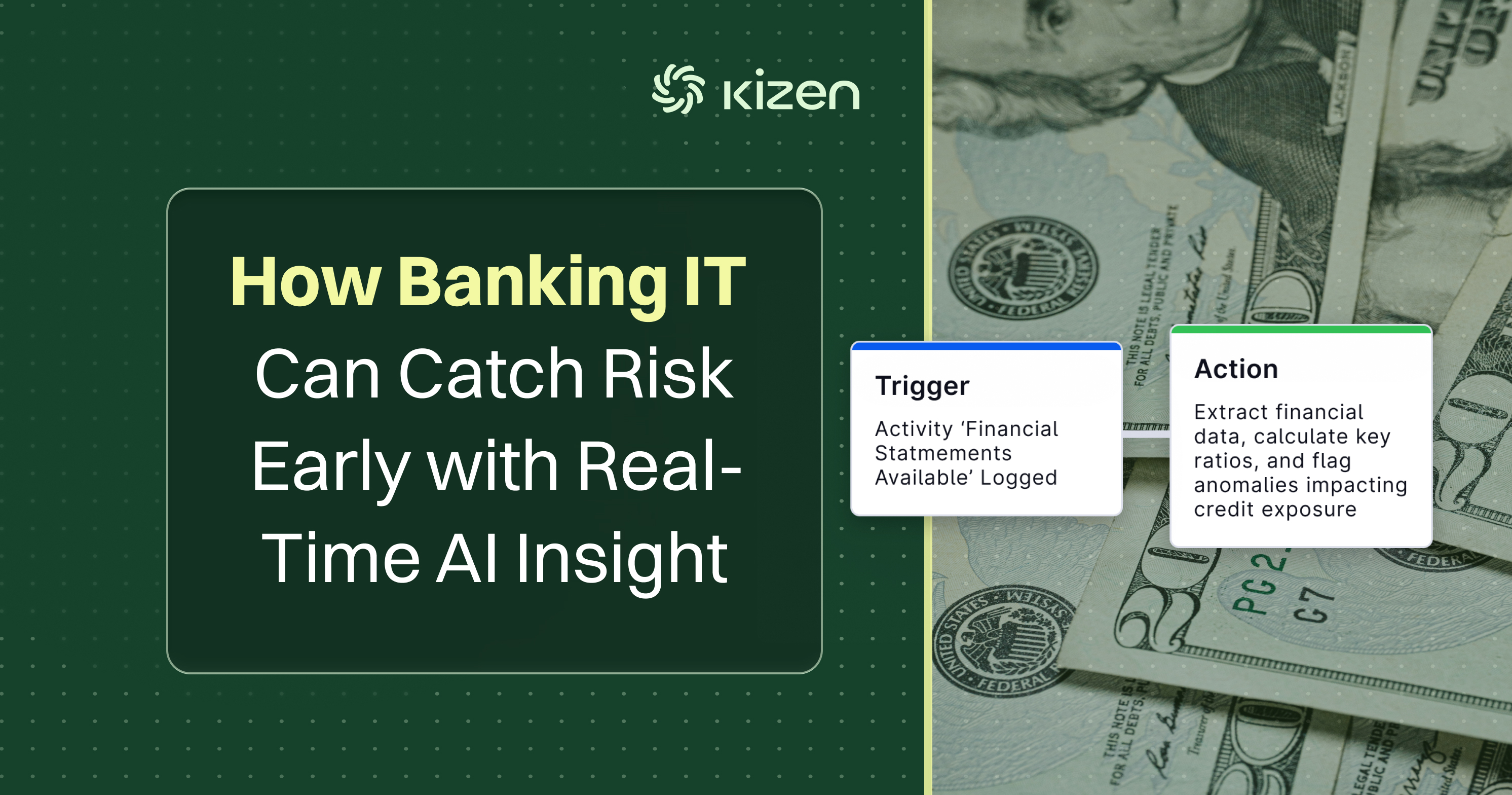
In late October, multiple loan write-offs sparked concern across regional banks. Beneath the losses revealed a deeper problem: slow, disconnected risk data. When your systems can’t surface exposures until days, weeks, or months after they occur, every missed alert becomes a potential multimillion-dollar loss. Below, we’ll unpack what happened in late October, what it reveals about today’s data blind spots, and how modern Banking IT teams can use real-time AI to detect and mitigate risks before they escalate.
In the span of two weeks, three main lenders alarmed the market:
The announcements pushed the KBW Bank Index (a benchmark that tracks the performance of leading U.S. banks stocks) down by 7% and left investors weary. On top of the bad loans, in a desperate attempt to make up for their short-term losses, “the Federal Reserve data [showed] that banks tapped the central bank’s overnight ‘repo’ facilities for the second night in a row, an action banks [had] not needed to take since the COVID-19 pandemic” (Los Angeles Times).
This isn’t the first time regional banks have made headlines for their losses. The heightened tension parallels the 2023 collapses of SVB, Signature Bank, and First Republic, which showed what happens when banks spot liquidity risk too late.
Silicon Valley Bank, for instance, collapsed after rapid interest rate hikes reduced the value of its long-term bond holdings. When requests for withdrawals surged, it got to a point where SVB was forced into selling those bonds at a loss for quick liquidity. On March 9, 2023, SVB’s share fell by 60% and “by that evening, $42 billion in deposits had left the bank [in a few hours] with an additional $100 billion staged to be withdrawn the next day,” according to the FDIC.
The pattern among regional banks is clear: each crisis stems from the same root cause, delayed visibility into risk. The future of Banking IT depends on modernized systems that surface anomalies in real time and flag issues before they escalate into credit losses, compliance breaches, or liquidity crises.
A bank's integrity is at risk when it fails to recognize warning signs in a timely manner. For example, AI-powered, real-time loan monitoring, might have caught anomalies in commercial portfolios and borrower conduct at Zions quicker, potentially averting costly multimillion-dollar write-offs. At Silicon Valley Bank, unified, real-time data could have revealed the early warning signs: deposits quietly declining quarter over quarter due to a pullback on venture funding, rising losses on bond holdings, and an overconcentration of clients in a single sector - venture-backed tech startups (FDIC).
Kizen adds in the missing layer that transforms risk management by closing the gap between data and decision. Our AI-native platform brings every line of defense (business operations, compliance, risk, and audit) onto the same real-time data view, so teams can identify and act on emerging risks instantly. When anomalies appear, Kizen automatically flags exposure, routes reviews to the right teams, and tracks resolution for audit. With Kizen, your bank can go from reactive to proactive with automation driving every step.